
Beyond the Headlines: Hawaiʻi Students Discover the China They Never Expected
“The best classroom doesn’t always have four walls.”
For seventeen high school students from Hawaiʻi, the summer of 2026 was much more than a vacation overseas. It became a journey of discovery—one that challenged assumptions, broadened perspectives, and built friendships across the Pacific.
From June 5–19, the 2026 Hawaiʻi Youth Delegation to China traveled through Shanghai, Nanjing, and Beijing on a two-week educational and cultural exchange hosted by the China Soong Ching Ling Foundation (SCLF). Accompanied by three teacher chaperones, the students represented eight Hawaiʻi schools: Kalani High School, Mid-Pacific Institute, Kaiser High School, Maryknoll School, Moanalua High School, Le Jardin Academy, ʻIolani School and Punahou School.
Their itinerary included visits to some of China’s most treasured historical landmarks, world-leading technology companies, modern schools, museums, cultural sites, and family homes. Yet when the students reflected on their experience afterward, their essays revealed something far more meaningful than a travel itinerary.
They described a journey that transformed how they see China—and, perhaps more importantly, how they see the world.
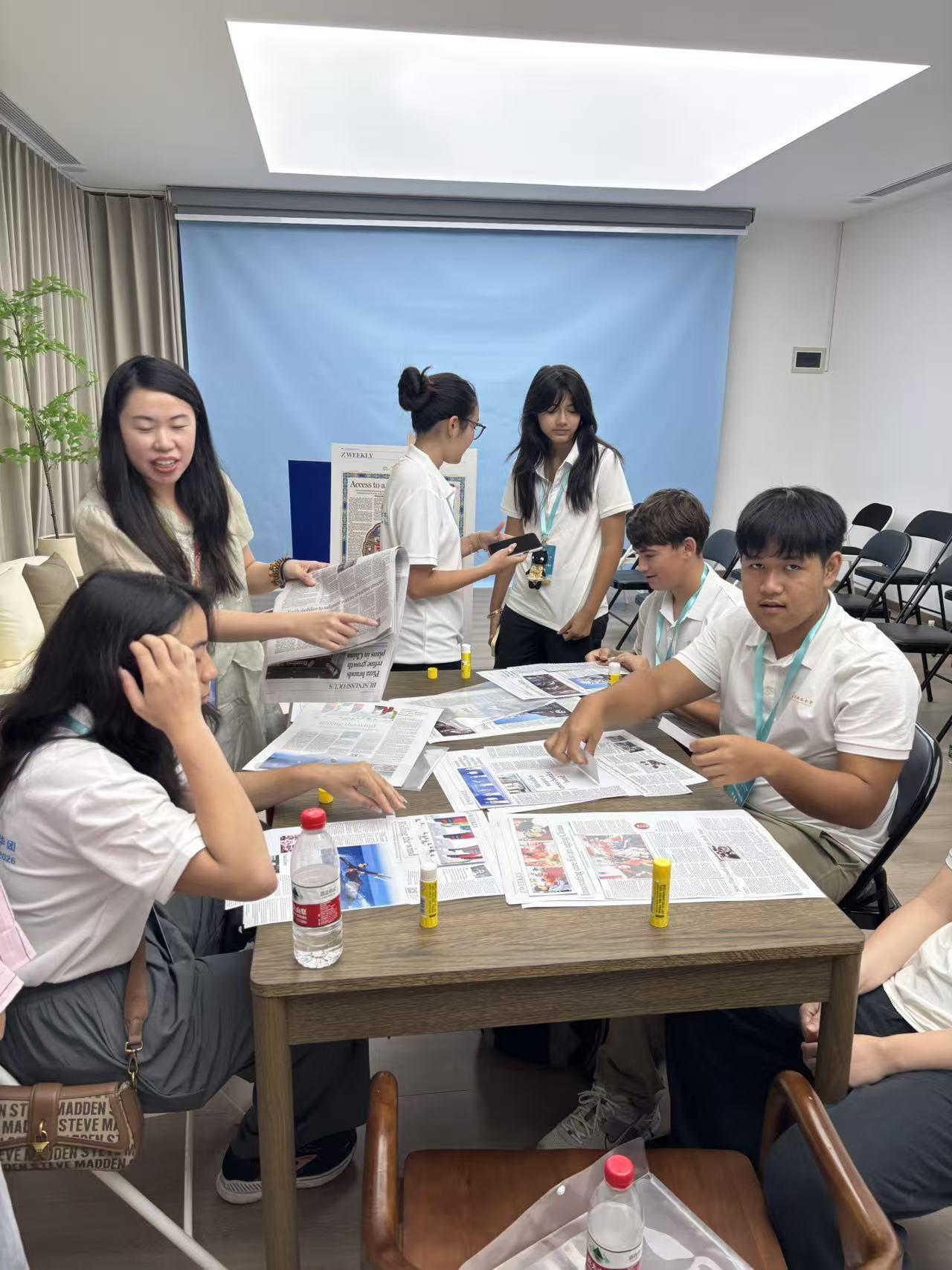
At China Daily, students learned how to design layout for a special edition
History Comes Alive
For many students, Chinese history became real for the first time.
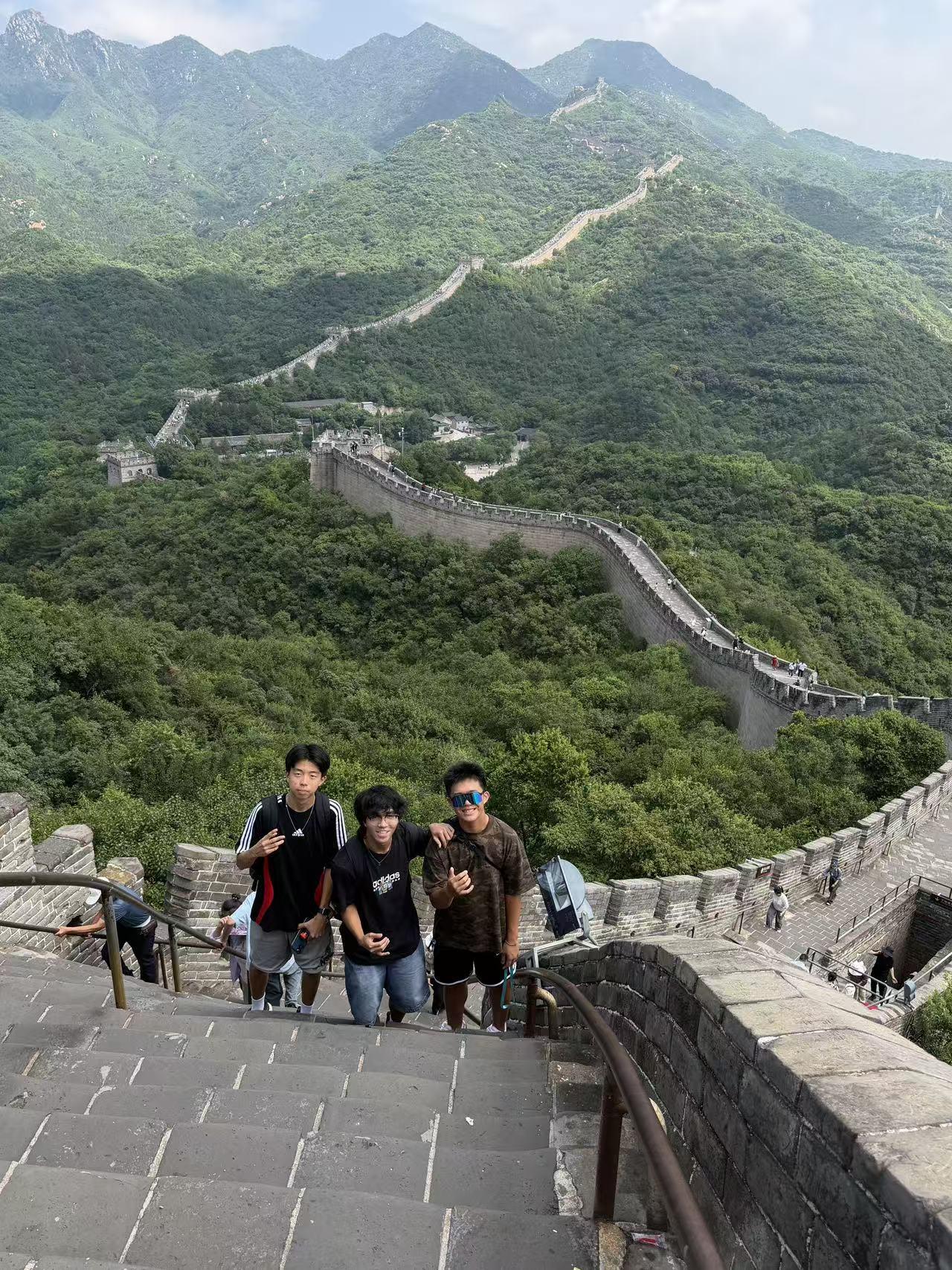
Standing atop the Great Wall, walking through the Forbidden City, and visiting the former residences of Dr. Sun Yat-sen and Madam Soong Ching Ling allowed students to experience history where it happened.
One student reflected that seeing these places in person made history feel “alive rather than something learned only from textbooks.”
Another wrote that returning to the Great Wall years after visiting as a child gave the experience entirely new meaning. “I understood much more about its history and significance.”
The visit to the Sun Yat-sen Mausoleum in Nanjing held special meaning for the delegation. Dr. Sun’s educational years in Hawaiʻi created a unique bond between the islands and China, reminding students that the relationship between the two places stretches back more than a century.
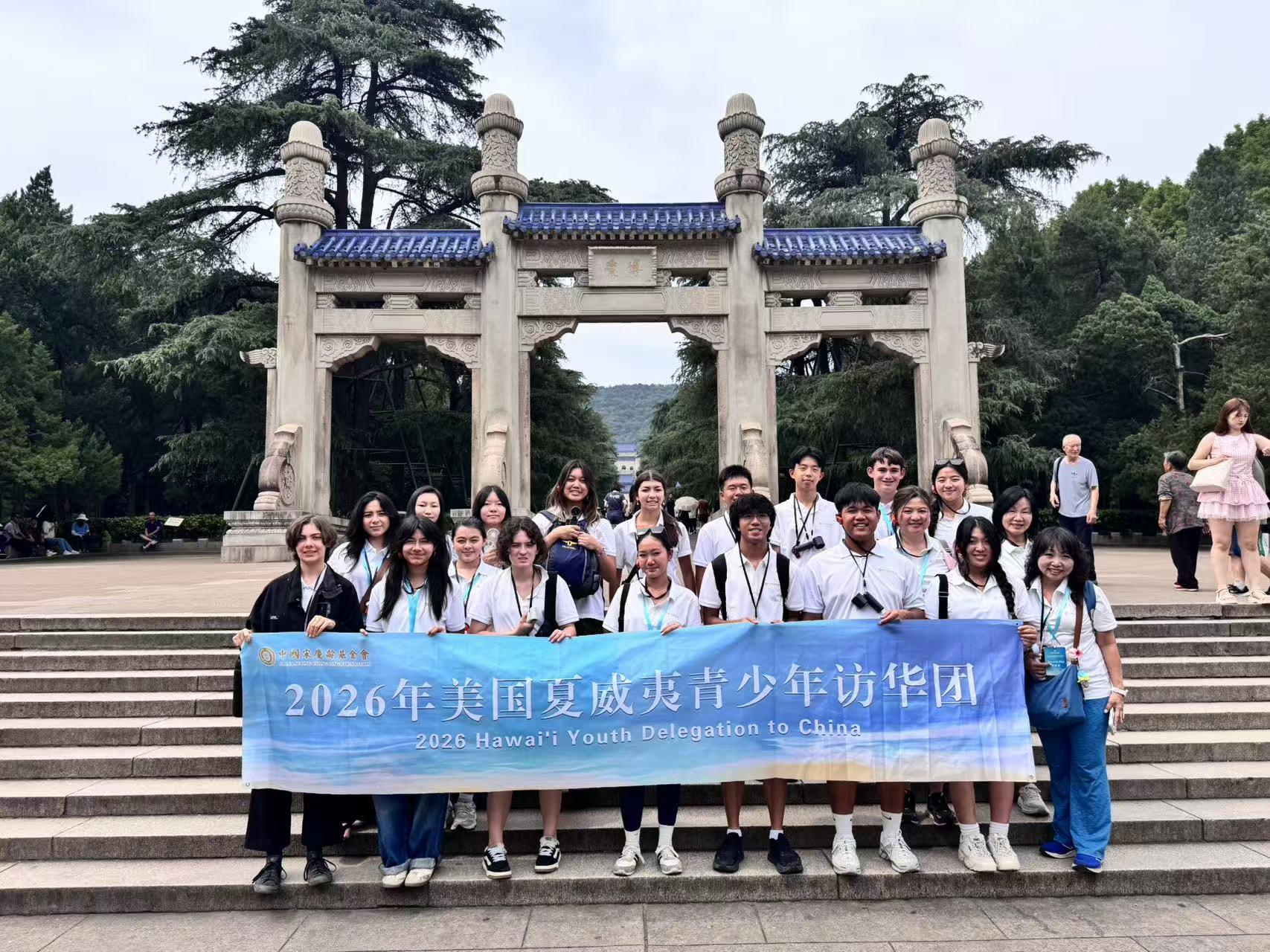
Students’ visit to Sun Yat-sen Mausoleum in Nanjing paying respect to Dr. Sun
Discovering a Different China
Before leaving Hawaiʻi, many students admitted they knew China largely through news reports, social media, or secondhand opinions.
The trip challenged many of those assumptions.
Students were impressed by modern cities, clean public spaces, efficient transportation, and the integration of digital technology into everyday life.
High-speed rail connected cities with remarkable speed and comfort. Mobile payments, smart logistics, and digital services demonstrated how technology had become seamlessly woven into daily living.
Several students commented that they had not expected to see such rapid innovation.
“I realized there is so much more to China than what we usually hear,” one student reflected.
Rather than replacing one viewpoint with another, students learned the value of seeing a country firsthand before forming conclusions.
Innovation Inspires the Next Generation
One of the biggest surprises came from visits to China’s leading technology companies.
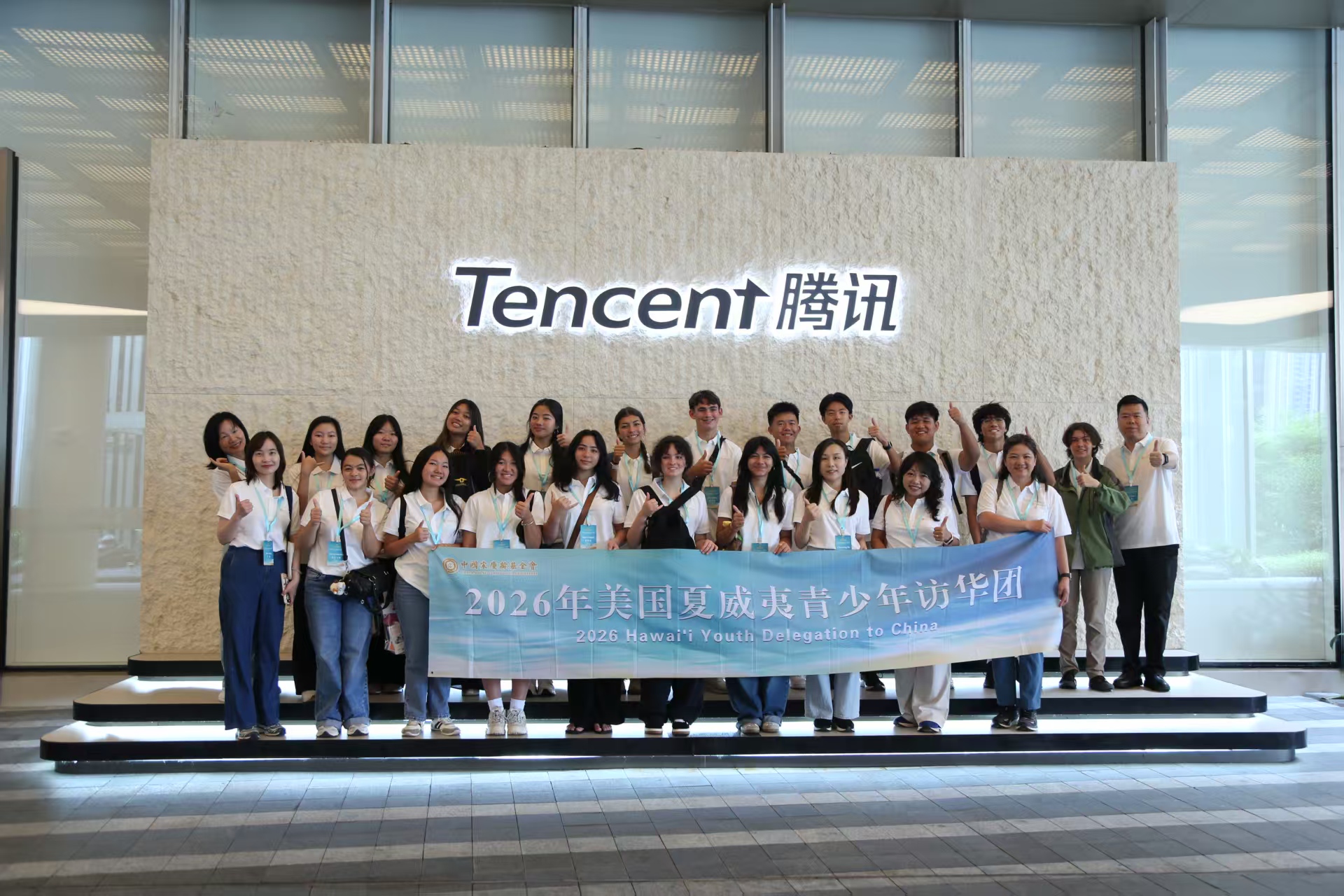
At Tencent, students saw how technology connects millions of people every day.
At Xiaomi’s electric vehicle factory, they watched advanced robotics and automation working together with extraordinary precision.
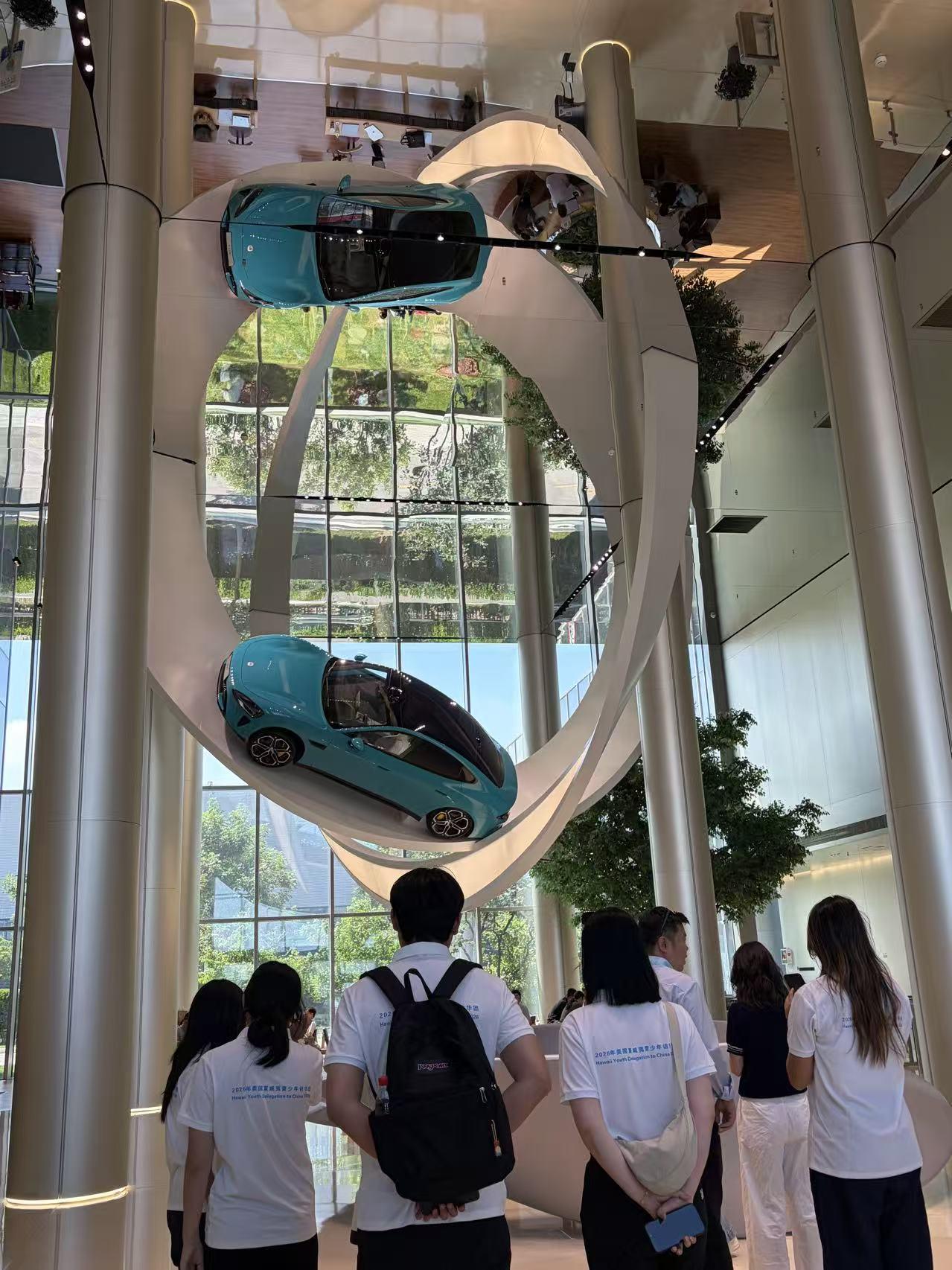
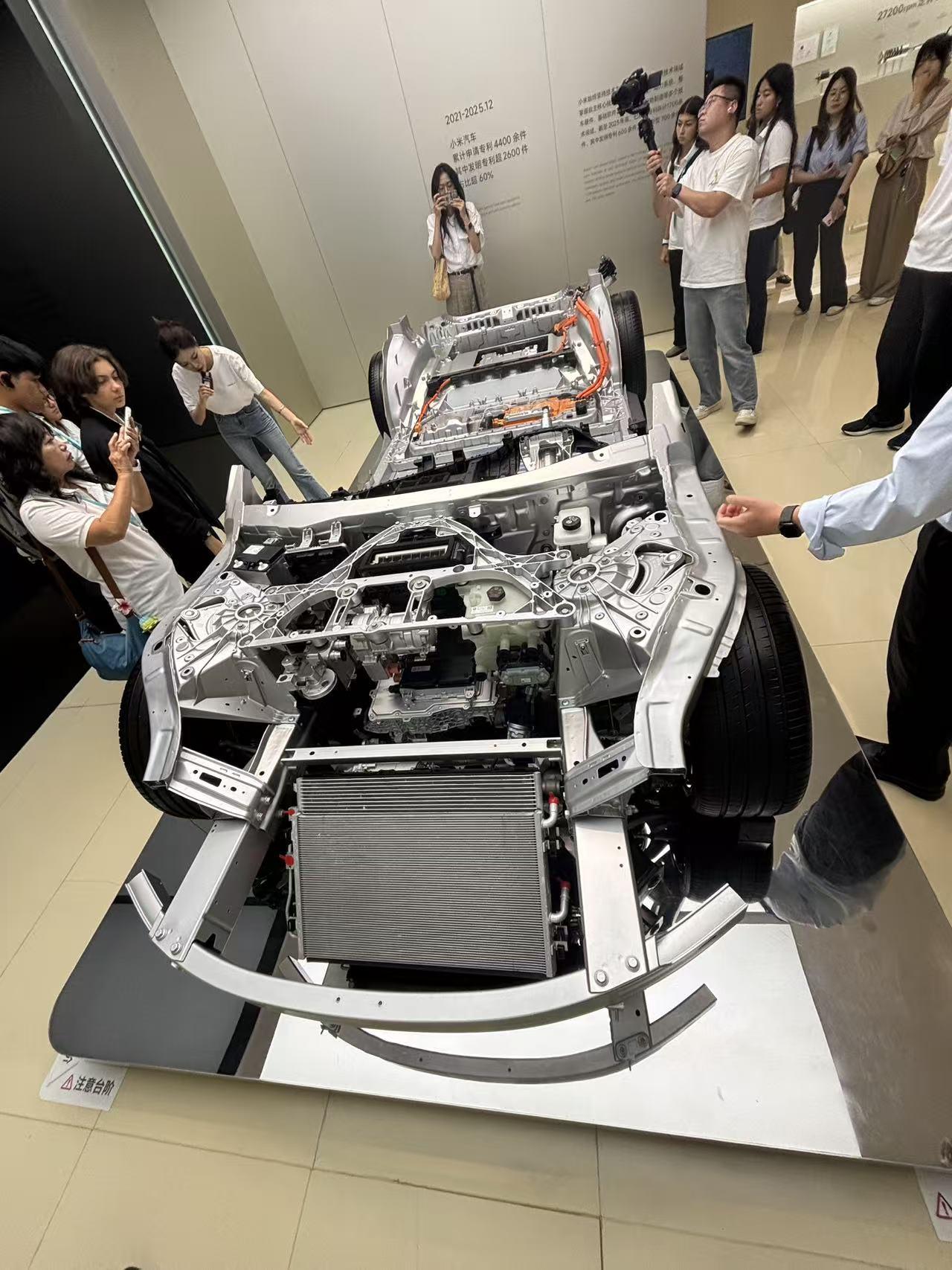
Visiting Xiaomi’s intelligent electric vehicle production line in Beijing. The state-of-the-art factory showcases advanced automation and robotics and delivered more than 410,000 electric vehicles in 2025, demonstrating China’s rapid progress in smart manufacturing.
At iFLYTEK, they explored artificial intelligence applications in education, language learning, and communication.
For students interested in engineering, robotics, and computer science, these visits became unforgettable moments.
One participant wrote that the experience changed how they viewed careers in technology and inspired them to think more globally about future opportunities.
Instead of reading about artificial intelligence, students experienced it firsthand.
More Than Classrooms
Perhaps the most memorable part of the journey took place not in museums or corporate headquarters, but inside the homes of Chinese families.
During their homestay in Shanghai, Hawaiʻi students shared meals, conversations, and everyday life with students their own age.
Language differences quickly faded. Friendships grew through laughter, games, music, and simple acts of kindness.
Many students described the homestay as the emotional highlight of the entire trip.
“The experience reminded me that friendship does not require speaking the same language perfectly,” one student wrote.
Another reflected, “We discovered that teenagers everywhere have similar dreams, worries, hobbies, and hopes.”
Learning Beyond the Classroom
The delegation also visited schools where Hawaiʻi students attended classes, participated in activities, and interacted directly with Chinese students.
They quickly discovered that while educational systems may differ, curiosity, creativity, and determination are universal.
Students exchanged ideas about academics, sports, music, family life, and future goals.
Several remarked that they hoped to stay in touch with their new friends long after returning home.
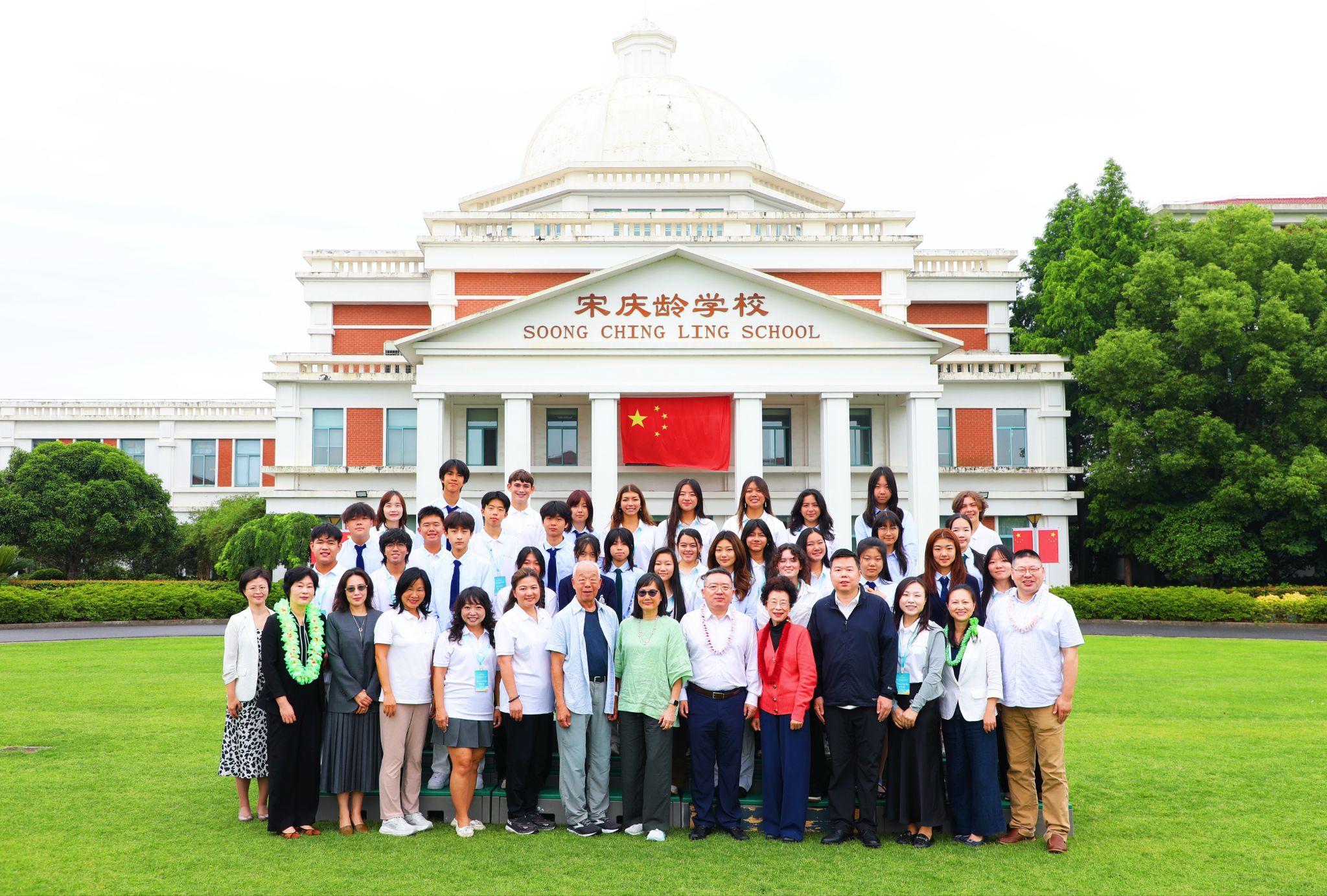
Hawaii students with their “partners” at the Soong Ching Ling School in Shanghai
Becoming Ambassadors
Although the students traveled to China to learn, they also represented Hawaiʻi.
They shared Hawaiian culture, answered questions about island life, exchanged gifts, and introduced new friends to local traditions.
Throughout the journey, they realized that cultural exchange is a two-way street.
Every conversation helped build greater understanding between people separated by thousands of miles but connected through curiosity and respect.
By the end of the trip, many students no longer viewed themselves simply as participants.
They viewed themselves as ambassadors of friendship.
A Journey That Continues
When the delegation returned home, suitcases carried souvenirs. Hearts carried something much more valuable.
Students returned with lifelong friendships, renewed confidence, deeper cultural understanding, and a broader perspective of the world.
One student’s closing reflection captured the spirit of the entire delegation:
“This trip expanded my understanding of China, the world, and myself. I came home with unforgettable memories, meaningful friendships, and a greater appreciation that people from different cultures have far more in common than we often realize.”
In a time when international headlines often emphasize differences, the Hawaiʻi Youth Delegation demonstrated something equally important—that genuine understanding begins with meeting one another face to face.
For these seventeen young people, the trip to China has ended. But the friendships they formed, the lessons they learned, and the bridges they built will continue for years to come – if not for a lifetime.
As they return to classrooms across Hawaiʻi, they carry with them more than memories. They carry a responsibility to share what they experienced and to help others see that diplomacy is not practiced only by governments—it is also built by students, families, teachers, and communities, one conversation at a time.
The future of Hawaiʻi’s relationship with China will be shaped not only by official meetings, but also by young people willing to listen, learn, and lead with open minds. Judging by this delegation, that future is bright.
The Hawaiʻi Youth Delegation to China is more than a study tour—it is an investment in the next generation of leaders who will strengthen the enduring friendship between Hawaiʻi, the United States, and China through mutual understanding, respect, and people-to-people exchange.
Editor’s Note
The 2026 Hawaiʻi Youth Delegation to China was graciously hosted by the China Soong Ching Ling Foundation (SCLF).
The delegation was jointly organized by Yen Chun, Executive Vice President of the Dr. Sun Yat-sen Hawaiʻi Foundation, and Dr. Cyndy Ning, President of the Chinese Language Education Association of Hawaiʻi (CLEAH). Together, they coordinated the educational program, student and teacher selection, and cultural exchange opportunities in collaboration with partners in Hawaiʻi and China.
The organizers extend their sincere appreciation to the China Soong Ching Ling Foundation, the participating schools, teacher chaperones, host families, and all those whose generosity and support made this life-changing educational exchange possible.
